The art of a better night
Naturepedic Wooly vs. Healthy Choice: Comparing Organic Wool Sleep Layers
A wool mattress topper is a quiet kind of luxury: not a dramatic reinvention of the bed, but a considered layer that can make its surface feel softer, more breathable and more inviting. Naturepedic Wooly and Healthy Choice Organic Wool share that essential appeal. Both are described as roughly three inches thick and built around wool and cotton. Their distinctions emerge in the details—cover fabric, how the construction is presented, listed sizing and the care guidance attached to each.
For anyone refining a sleep setup with organic wool bedding, those details matter. The most suitable topper is not necessarily the one with the grandest promise; it is the one whose feel, dimensions and upkeep align with the mattress beneath it and the way its owner likes to sleep.
At a glance: two wool layers, different details
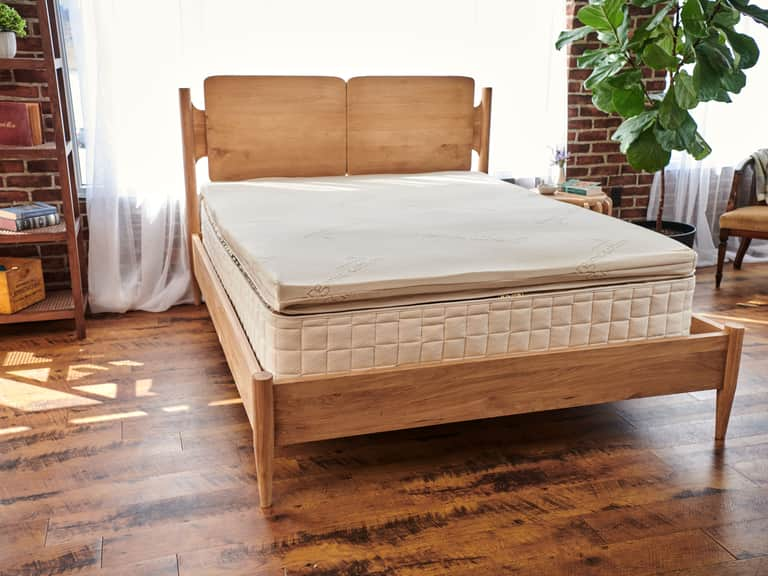
The Naturepedic Wooly Mattress Topper is listed as a three-inch topper made with certified organic wool batting and finished in breathable organic cotton sateen. Its product information describes full-body support and pressure-point relief, alongside wool’s moisture-wicking and temperature-regulating qualities. It is offered in several standard mattress sizes, from Twin through California King.
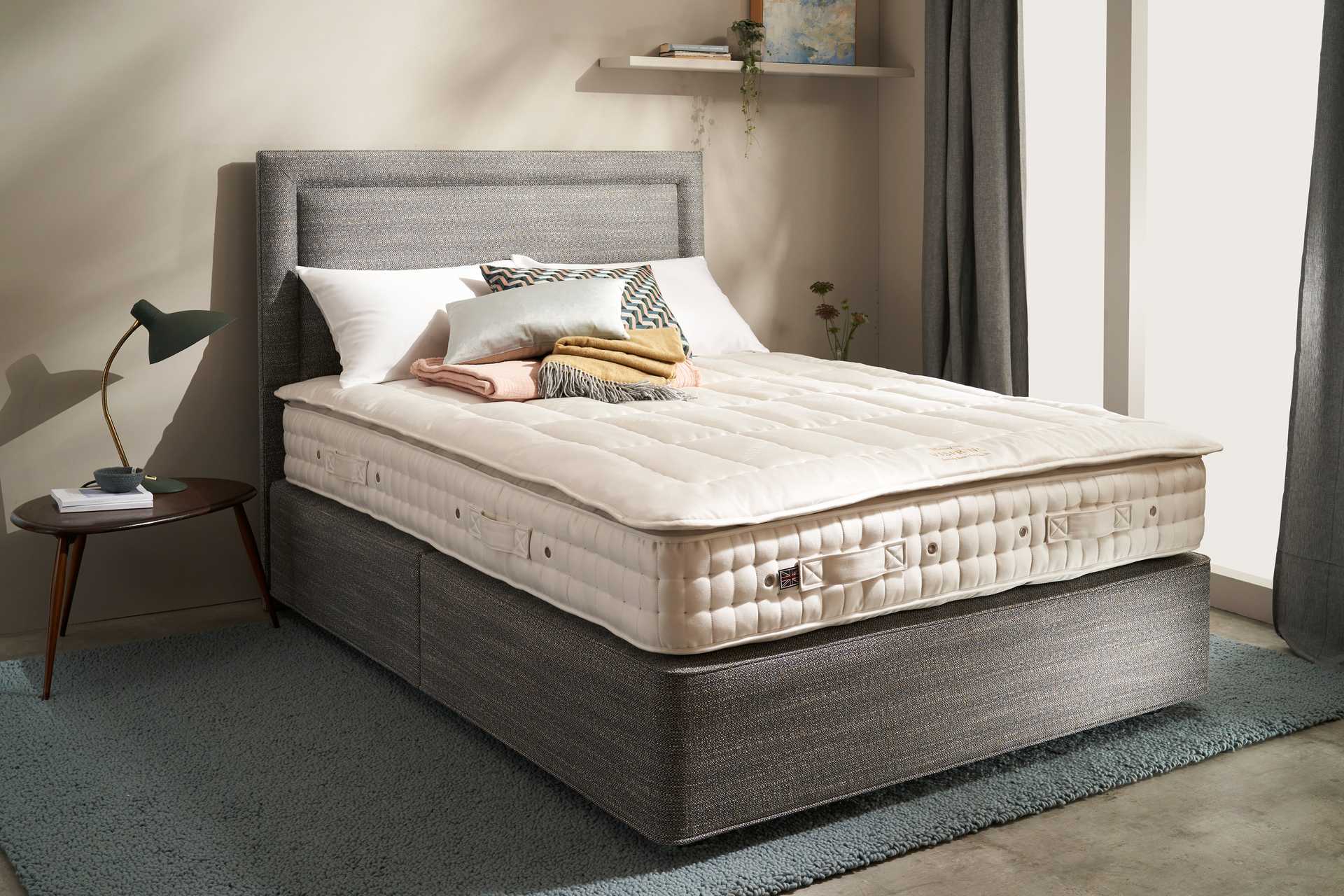
The Healthy Choice Organic Wool Mattress Topper is described as approximately three inches thick, with GOTS-certified organic wool nestled between two layers of GOTS-certified organic cotton. Its construction is said to help the topper lie flat, without shifting or bunching. The listing identifies it as handcrafted in Canada, but does not provide a size range in the supplied product details.
Both products center wool rather than latex or synthetic foam. Their shared material story may appeal to sleepers seeking a breathable, cushioned surface; the choice between them rests on the differences that can be confirmed, and on what each shopper should verify before ordering.
| Consideration | Naturepedic Wooly | Healthy Choice Organic Wool |
|---|---|---|
| Listed thickness | 3 inches | Approximately 3 inches |
| Main materials | Organic wool batting and organic cotton sateen cover | GOTS-certified organic wool between two layers of GOTS-certified organic cotton |
| Construction note | Layered wool batting; the supplied description does not specify a particular quilting method | Described as laying flat, without shifting or bunching |
| Sizes listed | Twin, Twin XL, Full, Queen, King and California King | Not specified in the supplied description |
| Care information | Spot clean only; turn and rotate regularly | Care instructions are not specified in the supplied description |
What wool brings to a mattress
Wool’s appeal is tactile, but its reputation is also practical. Its fibers can take up and release moisture, helping manage the dampness that naturally accumulates during sleep. The structure of wool can also hold insulating air while remaining breathable. Rather than functioning as a switch that makes a bed cool or warm, wool contributes to a more buffered, less clammy feel as conditions change through the night.
That quality is one reason wool mattress toppers can suit people who want a softer contact surface without simply adding a dense foam layer. A topper may provide a little extra cushioning and change how pressure is felt at shoulders, hips or other points of contact. The result depends on the topper’s design, the mattress underneath, body shape and sleep position. A wool layer is not a substitute for a mattress that has lost its essential support, nor can a product description guarantee relief for every sleeper.
Wool is also a natural fiber with a distinctive hand: gently springy, lofted and less slick than many smooth synthetic surfaces. In a bed, that can lend a composed, softly cushioned impression rather than the close, enveloping sensation associated with some foams. For a sleeper who wants to soften a firm mattress while retaining a relatively buoyant surface, an all-wool topper may be an appealing direction.
Material labels deserve careful reading. “Organic” can refer to particular components, and certifications have defined scopes. Check the product’s current certification details, including which materials are covered, rather than assuming that every part of a finished item carries the same certification. The descriptions for both toppers identify organic wool and cotton, while Naturepedic’s listing specifies certified organic wool batting and an organic cotton sateen cover. Healthy Choice’s description names GOTS-certified wool and cotton.
Naturepedic Wooly: a clearly specified, polished profile
Naturepedic Wooly makes its identity legible at a glance: three inches of organic wool batting, enclosed in organic cotton sateen. Sateen is known for a smooth, softly lustrous surface, a detail that gives the topper a refined finish without changing its essential character as a wool-filled comfort layer. For shoppers who value an explicitly named cover fabric, this is a helpful point of distinction.
The listed thickness suggests a substantial addition to the mattress rather than a barely perceptible pad. That can be attractive to someone who wants a more cushioned, pillow-top-like feel, though the experience will vary with the firmness and condition of the existing mattress. Three inches can also affect the way sheets fit. Deep-pocket sheets may be necessary, particularly if the mattress is already tall or has other layers in place. Measuring the full bed height before purchase is a small, useful act of preparation.
Naturepedic provides a broad size list—Twin, Twin XL, Full, Queen, King and California King—which helps shoppers match the topper to common mattress formats. The product information also gives maintenance direction: spot clean only, and turn and rotate regularly. It recommends a protector to help prevent fluids from reaching the wool. This is practical guidance for a material that is not intended for routine machine washing.
For people who like a product page to answer basic questions directly, the Wooly listing offers a comparatively complete starting point: thickness, cover material, size availability and core care guidance. Before ordering, it is still wise to confirm the precise dimensions for the selected size, current warranty terms and any instructions supplied with the item. Product details may change over time.
Healthy Choice Organic Wool: simple materials, a flat-lay emphasis
Healthy Choice presents a straightforward composition: roughly three inches of GOTS-certified organic wool between two layers of GOTS-certified organic cotton. Its description emphasizes a handcrafted construction designed to remain flat on the mattress, with no shifting or bunching. That may resonate with shoppers who particularly dislike a topper that drifts or develops uneven areas beneath the bedding.
The stated thickness is approximate, an important nuance when comparing it with another product described as three inches. Natural filling and handmade construction can involve variation, so the phrase does not necessarily indicate a meaningful difference in loft. A useful comparison is to ask the retailer whether the finished height is measured in a consistent way and whether the topper’s dimensions are intended to match the mattress exactly.
The supplied Healthy Choice description does not give a size chart or care instructions. That absence should not be read as a flaw in the product itself; it simply means shoppers need to request more information. Confirm that the correct size is available, whether the topper has any attachment features, how it should be protected and cleaned, and what warranty applies. These are especially valuable questions before buying a wool layer, since moisture and improper washing can damage natural filling or its cover.
For someone drawn to a compact materials list and the promise of a neatly settled surface, Healthy Choice may be worth considering. The decision becomes easier when the retailer can provide written maintenance guidance and measurements for the exact size. A well-made natural layer is best enjoyed when its practical requirements are clear before it arrives.
The feel question: softness, support and sleeping position
Thickness alone does not tell the full story of comfort. Two toppers both measuring around three inches can feel different because of fill density, quilting, cover tension, the way fibers are arranged and how much the underlying mattress yields. Wool can compress under body weight, then recover to some extent, but it does not behave exactly like latex or memory foam. It tends to offer a gentler, more fibrous cushion rather than a deep, closely contouring cradle.
Side sleepers often pay close attention to pressure at the shoulder and hip. A lofted wool layer may soften the first impression of a firm bed, but the degree of pressure relief is individual. Back sleepers may prioritize a surface that cushions without allowing the pelvis to sink too far. Stomach sleepers often prefer a firmer, flatter feel; a thick comfort layer may not suit everyone in this position. In each case, the mattress beneath remains central to alignment and support.
Consider the topper as a finishing layer, not a cure-all. If a mattress sags visibly or no longer keeps the body comfortably supported, adding a topper may disguise the problem rather than solve it. If the mattress is structurally sound but feels a little too firm, a wool layer can be a more measured adjustment. Whenever possible, check the return policy and ask how comfort issues are handled after the topper has been used.
Personal temperature preferences matter, too. Wool’s moisture management and breathability can contribute to a more comfortable sleep environment, but bedding, room temperature, mattress construction and individual physiology all influence warmth. Neither topper should be treated as a guarantee against overheating. Think of wool as one component in a layered system, alongside sheets, blankets and the mattress itself.
Construction and cover: where the products diverge
The most obvious documented construction distinction is the cover. Naturepedic names an organic cotton sateen fabric, which gives the buyer a specific textile description to consider. Healthy Choice describes two layers of GOTS-certified organic cotton around its wool, but the supplied information does not name a weave such as sateen or percale. If the surface feel matters, ask about the fabric’s hand, weave and whether the cotton is quilted or otherwise secured to the fill.
Healthy Choice’s description makes an explicit claim about the topper lying flat and avoiding bunching. The Naturepedic description emphasizes its wool batting, comfort and care, without the same construction statement in the supplied details. That does not establish that one will shift and the other will not. It means only that the available product descriptions highlight different features. For either model, ask how the topper is held in place and whether a fitted sheet, mattress protector or corner straps are expected to secure it.
Construction also affects everyday handling. Wool toppers can be weighty compared with thin mattress pads, and a three-inch layer may require two people to lift or reposition comfortably. A protector placed over the topper can help guard against spills and perspiration, but its fabric should not undermine the breathable feel you want. Look for a protector sized to accommodate the full height of the mattress and topper together.
Care is part of the purchase
Natural materials reward a gentler approach. Naturepedic’s listed guidance is specific: spot clean only, turn and rotate the topper regularly, and use a protector to help prevent fluids from reaching it. The listing gives a rotation frequency of two to four times a year. Follow the care instructions supplied with the product, and avoid assuming that a wool-filled topper can be washed in a household machine.
For Healthy Choice, the product details provided here do not specify cleaning or rotation instructions. Ask the seller for the manufacturer’s care guidance before purchase, preferably in writing. It is worth clarifying whether spot cleaning is permitted, what cleaning agents are appropriate, how the topper should be dried and whether regular rotation is recommended. Do not apply the care instructions for one brand to another by assumption.
A mattress protector is a practical first line of defense, especially for a layer that is spot-clean only or has no listed washing instructions. Ventilate the bed when possible, allow damp bedding to dry fully and attend to small spills promptly according to the relevant care guidance. If a topper becomes wet, do not cover it until it is completely dry; trapped moisture can affect natural fibers and encourage odor.
These layers are intended to be used as part of a bed, under sheets and ideally under a suitable protector. They are not designed to replace routine mattress care. Keep the mattress and topper clean according to their respective instructions, and store any removable layer in a dry, well-ventilated place if it needs to be taken off the bed for an extended period.
How to choose between them
The comparison is less a contest than a matter of which details deserve priority. Naturepedic Wooly may be the more convenient option for a shopper who wants a clearly stated three-inch profile, named cotton sateen cover, a published range of standard sizes and specific spot-cleaning and rotation advice. The product information gives a useful framework for planning fit and upkeep.
Healthy Choice Organic Wool may appeal to someone drawn to its stated wool-and-cotton construction, its approximate three-inch loft and the claim that the topper is designed to lie flat. Its handcrafted Canadian production may also be a relevant consideration for shoppers interested in where an item is made. Because its supplied description omits sizing and care details, those questions should be answered before a purchase is finalized.
Use this checklist when comparing the two:
- Measure the mattress. Confirm its width, length and height, then check the topper dimensions and the depth of your fitted sheets.
- Decide how much change you want. A layer around three inches thick can make a noticeable difference to the bed’s surface and overall height.
- Read the materials description closely. Note the wool, cotton cover and any stated certifications without assuming that a label applies to every component.
- Ask about securing the topper. Find out whether it relies on the fitted sheet, a protector, corner straps or another method.
- Get care guidance in advance. Confirm cleaning, drying and rotation recommendations for the exact product.
- Review warranty and returns. Understand the terms before opening or using the item, especially if comfort is the deciding factor.
Organic wool bedding, considered as a system
A beautifully made sleep layer is only one element of a considered bed. Mattress firmness, pillow height, sheet texture, room climate and personal preference all contribute to the final experience. A wool topper can bring a softer hand and breathable cushioning, but it cannot transform every mattress into the same sleep surface. It is useful to think in terms of balance: the base provides support; the topper adjusts the immediate feel; the bedding protects and completes the arrangement.
That perspective also helps keep expectations grounded. Marketing phrases such as “full-body support” and “pressure relief” describe intended benefits, not a promise of a specific medical result. If discomfort is persistent or severe, product selection is not a substitute for appropriate professional advice. For everyday comfort decisions, however, material transparency, dimensions and maintenance are eminently practical places to begin.
Whether choosing Naturepedic Wooly or Healthy Choice Organic Wool, take time to verify the information that will matter after delivery: fit, cover feel, retention on the mattress, care and service terms. The better-informed choice is often the one that feels most effortless in use, disappearing into the nightly routine while quietly making the bed more inviting.
The final comparison
Naturepedic Wooly and Healthy Choice Organic Wool share a clear proposition: a roughly three-inch wool comfort layer intended to add cushioning while drawing on wool’s breathable, moisture-managing character. Naturepedic stands out in the details provided—organic cotton sateen, six listed mattress sizes and explicit spot-cleaning and rotation instructions. Healthy Choice emphasizes wool between two layers of certified organic cotton, handcrafted construction and a flat-lay design, while leaving size and care specifics to be confirmed.
For shoppers who prize readily available specifications, Naturepedic offers the more fully documented starting point. For those intrigued by Healthy Choice’s construction and making, a quick conversation with the retailer can fill in the practical gaps. In either case, measure carefully, protect the wool, and choose according to the feel you want from the bed you already own. A considered topper does not need to be extravagant to feel special; it simply needs to make sense for the sleeper beneath it.